Dune 1984

In the deep desert of Arrakis, beneath a sky trembling with heat, Muad’Dib stood before the gathered tribes.

The wind moved across the dunes like a whisper from Shai-Hulud. The Fremen waited.

Muad’Dib — Paul Atreides — lifted his hand.

“I will not ask you to die for a banner,” he said. “Nor for revenge. I will fight a different battle — not with crysknife, but with words.”

He spoke of a distant council chamber beyond the sands — the assembly of nations on old Earth.

“The true battlefield,” he said, “is not only the desert. It is the halls of power, where men decide the fate of rivers.”

He named ancient rivers — the Euphrates, the Tigris — waters once called the cradle of civilization. He spoke of Iraq, once Babylon, scarred by war and ambition.

“There were promises,” Muad’Dib said carefully. “Promises that armies would not linger forever. That lands would not be broken and left dry.”

He did not curse any leader by name. But the Fremen understood he spoke of powers like those once led by George W. Bush, whose war reshaped the region.

Muad’Dib raised his voice.

“I will go to the council of nations — to the great chamber known as the United Nations — and I will win hearts and minds. Not through fear. Through vision.”

He described a future beyond oil wars and border disputes.

“The Euphrates will flow free,” he said. “Date palms will grow again. The seeds you carry in your pouches will root in green soil.”

The Fremen murmured.

“Water,” Muad’Dib continued, “is power. We will not seize it — we will create it.”

He spoke of solar-powered desalination along forgotten coasts. Of gravity-fed channels carrying fresh water inland. Of greening deserts — not only Arrakis, but the Sahara and the lands between the rivers.

Some whispered: Is this not the Golden Path?

Muad’Dib’s gaze hardened.

“There will be no empire built on supremacy,” he said. “No greater dominion imposed by sword or prophecy. The future belongs to those who cultivate, not conquer.”

A young Fremen asked, “And if they refuse?”

Muad’Dib answered:

“Then we outgrow them. We show the world that paradise can be engineered without annihilation.”

Above them, the twin moons rose.

The jihad that once burned across the stars had taught him a terrible lesson: force wins territory, but vision wins time.

“And this time,” Muad’Dib said softly, “we fight to make the desert bloom.”

The Fremen struck their stillsuits in solemn rhythm.

Not for war.

For water.

A Date With a Muslim

Joe the Janissary met Sophie Ellis-Bextor under a lantern-lit café terrace just after sunset.

“Joe,” Sophie smiled, stirring her tea, “if I were to date a Muslim man, what would that even look like?”

Joe straightened his coat with theatrical seriousness. “Sophie, in traditional Islamic practice, we do not ‘date’ in the Western sense. The idea of casual romance, candlelit ambiguity, and ‘let’s see where it goes’ is… how do I say… structurally inefficient.”

She raised an eyebrow. “Not even a speed date? Five minutes, a handshake, a ‘What’s your favorite color?’”

Joe paused. “Speed… consultation, perhaps.”

“And what about sharing a date after the Ramadan fast?” she teased. “A sweet one. Medjool, maybe.”

Joe sighed. “Sharing a date after Ramadan is acceptable. Sharing a date-date before marriage is where the jurisprudence committee begins sweating.”

Sophie laughed. “So no disco ball? No dramatic entrance? Not even a chaperoned coffee?”

Joe considered this carefully. “There is something called halal courtship. Families aware. Intentions clear. Public settings. Respectful conversation. No vanishing into the night like it’s one of your music videos.”

“So,” she grinned, “less ‘Murder on the Dancefloor’ and more ‘Minutes from the Meeting’?”

“Precisely,” Joe nodded. “The objective is clarity, not confusion. In many Muslim cultures, the purpose of meeting is marriage. Not trial subscriptions.”

Sophie leaned forward. “But surely cultures evolve. Muslims live in London, Toronto, Sarajevo… You can’t freeze romance in the 9th century.”

Joe smiled. “True. Many Muslims today adapt. They might meet for coffee, talk privately in public spaces, maintain boundaries. The key principle is modesty and intention — not secrecy or impulsiveness.”

“And you?” she asked.

Joe hesitated dramatically. “I will consult my companions about this Western ritual of ‘taking a woman on a date.’ We may draft a proposal. Perhaps: supervised espresso.”

“With dessert?”

“Only after sunset,” he said solemnly. “And definitely a real date — the fruit — to maintain orthodoxy.”

Sophie laughed again. “Well, Joe, if you ever need a cultural liaison, I’m available for a very respectful, committee-approved coffee.”

Joe bowed slightly. “Then we shall begin with tea. It is less controversial.”

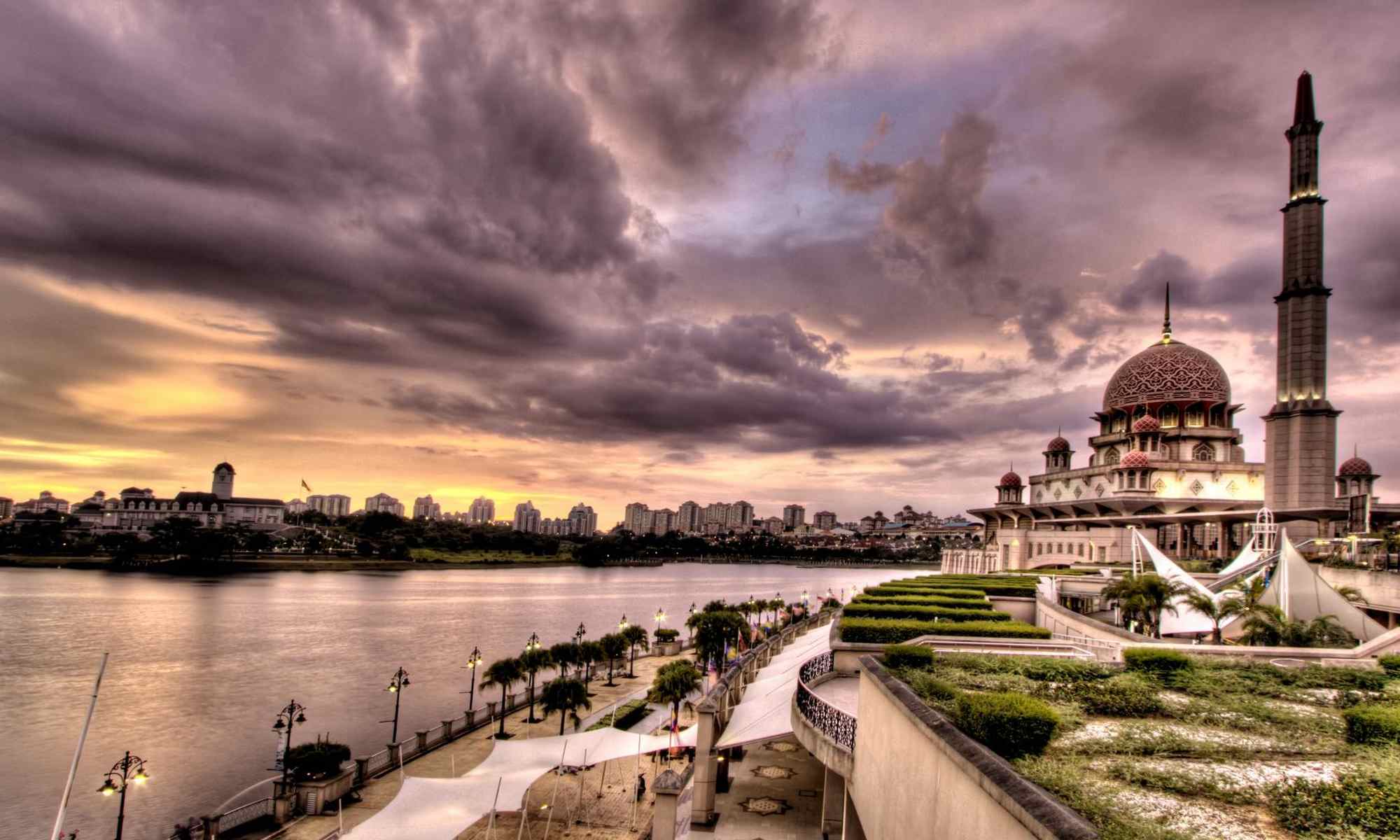
MOSQUE RENOVATIONS

Joe the Janissary stood up in the East Van community hall — no marble columns, no gold domes, no CGI skyline.

“Brothers and sisters,” he says, adjusting his thrift-store blazer, “we are not building the Death Star. We are not building a palace. We are building a place to breathe.”

He points at a hand-drawn budget on the whiteboard:

  • Wool carpets (so your knees don’t file a complaint)
  • Natural soap (so we leave cleaner than we came)
  • Water filters (because even saints need hydration)

“That’s it,” Joe says. “No crystal chandeliers. No ten-storey minarets. No ‘opening ceremony featuring hologram falcons.’”

Someone in the back yells, “What about that giant mosque prank like in Borat?”

Joe laughs. “Exactly. We are not doing a spectacle. We are not in a mockumentary directed by chaos. We are doing quiet dignity.”

He draws a small rectangle on the board.

“This,” he says, “is the dream mosque. Modest. Warm. Smells faintly of cedar and clean wool. You come in stressed. You leave calm. No ego architecture.”

An elder nods. “So no mega-fundraising gala?”

“Nope,” Joe replies. “Bring a carpet sample. Bring a filter. Bring a bar of olive soap. That’s our luxury.”

A kid asks, “Can we at least have good tea?”

Joe smiles. “Good tea is mandatory. Even the Janissaries would approve.”

The room laughs. Someone passes around a sign-up sheet titled:

East Van Mosque Budget: Practical & Peaceful

Joe finishes:

“We don’t need to impress the skyline. We just need to serve the people. If we stay humble, the building will feel bigger on the inside.”

And for once, nobody argues — because wool carpets, clean water, and humility are surprisingly hard to oppose.

Koran